
Quantcast
Skip to content
Communities
  • North Fork
    • Jamesport
    • Mattituck
    • Orient
    • Riverhead
    • Shelter Island
    • Southold
  • The Hamptons
    • Montauk
    • Quogue
    • Sag Harbor
    • Sagaponack
    • Southampton
    • Water Mill
    • Westhampton Beach
  • NYC
  • Palm Beach
  • Home Pros
  • Digital Editions
  • Dan’s Best of the Best
  • Contact Us
Dan’s Papers
  • Things to Do

    Events Calendar

    View and Post Events

    • Books & Authors
    • Community
    • Events & Entertainment
    • Fairs & Festivals
    • Film & TV
    • Fitness & Outdoors
    • Food & Drink
    • Galleries & Museums
    • Kids & Families
    • LGBTQ+
    • Nonprofits & Philanthropy
    • Performing Arts
    • Pets & Animals
    • Seasonal
    • Shopping
    • Virtual

    Dan’s Events

    Visit Dan’s Taste

  • Arts & Culture
    • Artist Profiles
    • Books & Authors
    • Galleries & Museums
    • Performing Arts
    • Music, Film & TV
  • Food & Drink
    • Recipes
    • Restaurants
    • Bars, Breweries & Distilleries
    • Wine & Wineries
  • Celebrity News
  • Local News
    • Crime & Police
    • Politics
    • Health
    • Business
    • Education
    • Environment
    • Obituaries
  • Real Estate
  • Lifestyle
    • Fashion & Style
    • Hotels & Inns
    • Kids & Family
    • Nonprofits & Philanthropy
    • Party & Event Photos
    • Wellness
    • Dan Rattiner’s Stories
Behind the Hedges

Saving Your Trees While Improving Your Home
By Scott Adams
Comments
4 minute 12/14/2011 Share
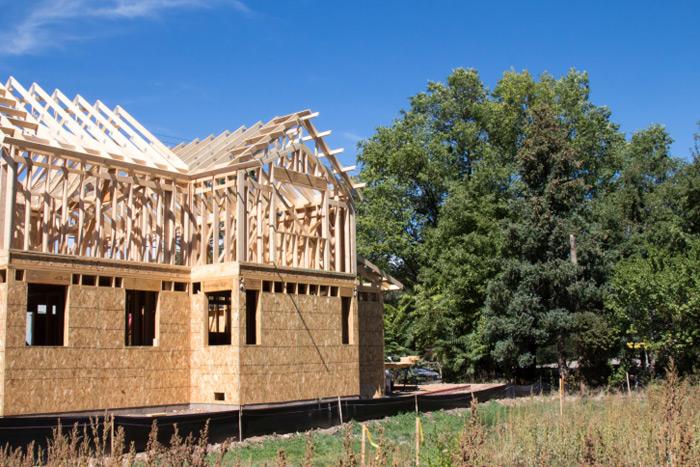
House construction next to trees
Photo: KaraGrubis/iStock/Thinkstock

Every house in the Hamptons wants to be at its best, evolving and changing over time. Fox Tree Service president Bart L. Fusco—a Certified Arborist and Registered Consulting Arborist—explains why putting an addition on your home does not have to mean a subsequent subtraction in your yard.

The Question:

I am having an extension built on my house and the new structure is going to be close to a group of existing trees and shrubs. How close can the foundation be to the trees before I have to remove them?

Close

Get the Full Story

News, events, culture and more — delivered to you.
Thank you for subscribing!

This site is protected by reCAPTCHA and the Google Privacy Policy and Terms of Service apply.

Bart L. Fusco of Fox Tree Service Says: Of course without seeing the trees and the footprint of the new structure, I can only give some guidelines for “Pre-Construction Injury Prevention.”

Trees and other plant material need to maintain a healthy root system. Removing roots or destroying the soil that supports a healthy root system not only leads to the decline of trees and other plant material, but can eliminate a tree’s anchor, causing the tree to fall.

The main consideration to evaluate the tree’s chance of survival is the extent of root damage that will be caused by the new construction.

This damage can be from multiple causes, such as compaction of the existing soil, changing of the soil grade, water runoff or new water retention, and the actual removal of roots during excavation for foundations and utility trenches.

The footprint of the building needs to take into consideration the extra width of the excavated soil needed to erect the forms necessary for concrete installation. This overcut could be the difference between a tree staying or needing to be removed.  If the root loss due to excavation is extensive, the tree should probably be removed, as it now has the potential to fall due to removal of anchoring roots.

Compaction of the soil can happen from construction equipment working around the root zone. A snow fence delineating the work zone will keep equipment from compacting the soil and may be all that is needed to save the existing soil structure.

Grade changes are unavoidable as rain water must be moved away from the new structure. Unfortunately, the feeder roots of trees are located in the top four to eight inches of soil, and removing soil removes these roots. Adding too much soil over the root system stops the gas exchange required by these roots, causing the decline of the root system.

Any steps taken to reduce the amount of root loss is desirable, for it is the compounding of these different causes of root loss that results in a tree’s failure. The more that is done to reduce the root loss, the better the survivability of the tree.

Have questions about the trees in your yard or caring for your trees this winter? You can contact Fox Tree Service in Suffolk at 631-283-6700, and in Nassau at 516-921-7111, or visit foxtreeservice.com.  

Conversations Profile

All comments are subject to our Community Guidelines. Schneps Media does not endorse the views shared by readers in our comment sections.

  • Vetted Hamptons Resources

    Hamptons Classified 

    Access our trusted network of local professionals and browse employment opportunities in the Hamptons.
    Find a Home Pro Search Jobs
  • Most Recent Articles

    Best Spots to See Cherry Blossoms on Long Island

    7 Great Spots to See Cherry Blossoms on Long Island

    LIF Day3

    Long Island Family Day at the Cradle of Aviation Museum – Exhibitors Wanted!

    LIF-long-island-cover-story-kitchen-shot-Brianne -Manz-Photo-cred-Ana-Gambuto-2024-08 (3)

    Brianne Manz Stroller in the City: A Journey to Long Island Bliss

    GettyImages-1255032403-1200×639-1

    8 Podcasts for Kids: Both Fun and Education!

  • Dan’s Papers

    The iconic mainstay of Long Island’s East End for over 60 years.

    Read Our Papers

    Digital Editions of Dan's Papers are available online.
    Get our best stories right into your inbox. Subscribe
    Follow us
    © Dan’s Papers 2026 Schneps Media |
    Designed by Digital Silk
    • Terms of Use
    • Privacy Policy

    Post an Event