
Vessel Afire!
 By Ty Wenzel
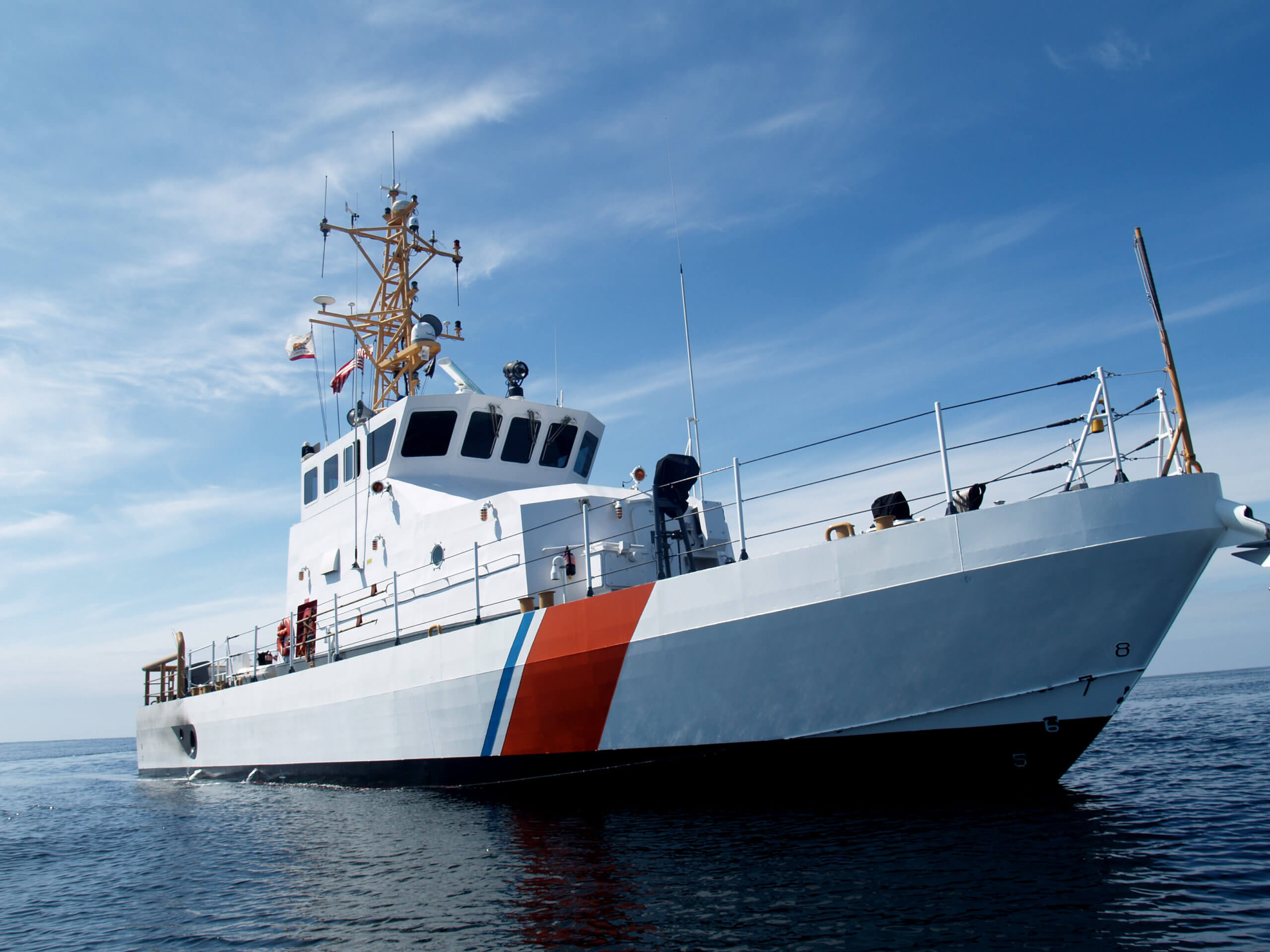
It would seem to me that one of the most frightening circumstances to be caught in is a boat afire. It is loaded with high-octane fuel creating toxic smoke. Using water to fight the fire can sink the boat. Leaving the boat may entail going into another hostile environment — cold and unforgiving water. It doesn’t sound like there are many, if any, good alternatives. Also, fire prevention professionals quote that, on average, a fire will double in area every five minutes. At that rate, it wouldn’t take long to engulf an entire boat. So, time is of the essence and it is highly unlikely that anyone can get to you in time to assist in the fire suppression. You and your crew, most likely, are it.
Causes of Fires
According to many studies, such as those conducted by entities such as BOAT/US, surprisingly, the engine is not the most likely source of fires on boats — electricity is. More than half of boat fires (55 percent) start with wiring or appliance failures. Next come fires started by an overheated engine but they are less than half as likely (24 percent). Less than 10 percent of boat fires (eight percent) start with a fuel leak. Of course, those can reach catastrophic proportions if the fire backs up into the tank itself. The rest is a mixed bag of “miscellaneous” — dropped match, stove spills, flare “slag” landing on the boat, etc.
An electrical fire, such as the one that starts from a frayed/chafed wire, is very different than one that is fed by a malfunctioning inverter or generator. The first is going to act like someone was smoking in bed — material is aflame but not being fed by the electricity itself. But it counts as the cause of the fire.
Types of Fire Extinguishers and Who Needs What
First, fire extinguishers themselves are classified into “A,” “B,” and “C” types. (There is a type “D” for chemical/combustible metals fires, such as would be created by the magnesium in a flare, but I have never seen it successfully used before the flare involved surrounding materials. Get the flare off the boat (let the fish below deal with it) and then deal with the fire. The easiest way to remember what they are used for is this:
“A” — the fire creates ash (paper, bedding, clothes, wood, etc. . .)
“B” — the subject afire can boil – (“Polls” or petroleum, oils and lubricants . . .)
“C” — a charge runs through it (electronic equipment . . .)
They also come in sizes (pounds of suppressant). For the private boater, size 1 (I) or 2 (II) is the most common and manageable. The question is really, “How many do I need for my size boat?” And the answers are:
All power boats, except outboards, less than 26 feet and of open construction must carry one B-I, U. S. Coast Guard approved fire extinguisher.
All power boats 26 feet to less than 40 feet must carry two B-I or one B-II U. S. Coast Guard approved fire extinguishers.
Boats 40 feet to less than 65 feet must carry three B-I or one B-II and 1 B-I U. S. Coast Guard approved fire extinguishers.
Larger vessels must adhere to Federal regulations about automatic fire-suppression systems in enclosed spaces.
Well, what are the suppressants and what is best for my boat might be the next set of logical questions. As would seem obvious to even the casual reader, carbon dioxide is one suppressant. It smothers the fire by withholding oxygen from the “fuel-oxygen-heat” equation. CO2 has one not-so-obvious drawback. If you use it on a type-B fire, the high pressure of the CO2 coming out of the canister may very well spread the fire. So, hold CO2 aside. Another suppressant type is “dry chemical.” It can handle “A,” “B,” and type-“C” fires, but it also has a problem. The chemical suppressant tends to be corrosive in a marine environment. Yikes . . . So hold that dry chemical aside too.
What tends to be best, at least for “A” and “B” fires, is foam. It smothers the fire. The foam is water-based so the use of it on an electrical fire (“C”) can be problematic as it may give a medium for the electricity to reach the salver — you! Of course, in a private boat such as found in our area, a foam extinguisher will work just fine. I just wouldn’t use it in an environment where a generator is putting out high voltage power to a large vessel with a myriad of electronic needs such as A/C, TV, radar, microwave oven, refrigerator, etc. That much juice is clearly something you don’t want to be in the middle of!
Where Do I Keep The Extinguishers?
If you awake to a fire, you may have to fight your way out of it. Every other extinguisher should be kept in a convenient place — near the galley but not in it, near the engine but not within the engine space, etc. Use common sense.
Boats Afire – Now What?
Act quickly. If you have help aboard, use it. Have someone turn the boat so the fire is down wind and proceed ahead as slowly as possible to maintain steerage. This will buy you time, as the fire can’t fight its way upwind easily. And have the helmsman call the USCG on VHF-16. Get the “rescue starts now” clock going. While reaching for the fire extinguishers, yell — “everybody into life-jackets!” If you do have to abandon ship, you are prepared. Aim the fire extinguisher at the base of the flame, not the flames themselves. You are seeking to smother the source of the fire, not the flames per se. Move the fire extinguisher back and forth across the source of the flame to spread the coverage. If the fire has a source such a flowing charge or liquid, and you can get to a shut-off valve, shut it off and starve the fire.
And be sure to call the U.S. Coast Guard — ASAP. Get the rescue-starts-now clock as soon as possible. They won’t get there in time to stop the fire — but they will task someone or something to get there in time to fish you out of the water if you have to abandon ship.
BTW, if you are interested in being part of USCG Forces, email me at JoinUSCGAux@aol.com.
Vetted Hamptons Resources