
Preventing A Collision At Sea, Part VII
 By Vin Pica
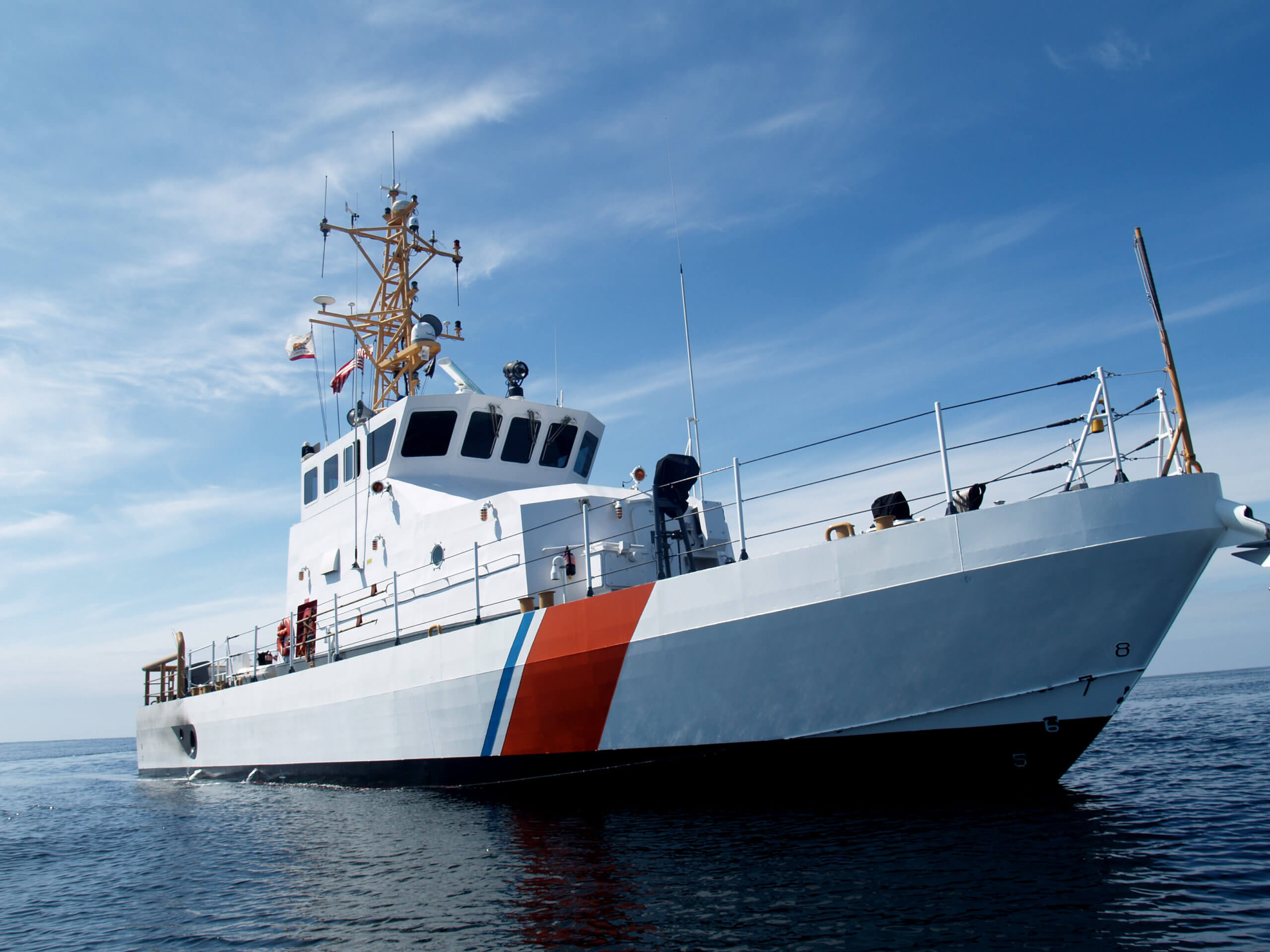
In 1875, Captain George Eldridge put the rules, as they were then defined, to poetry, among other learning aids. “If three lights I see ahead, turn to starboard, show my red, perfect safety dead ahead . . .”
Overview
As noted prior, there are only three conditions of vessels meeting on the waters: head-on, crossing, or overtaking situations. The rules govern how the skippers are to interact with each other through helm control and sound, or radio, signals. This is about two power-driven vessels heading straight at each other — the only time that both vessels give-way.
Rule 14 – Head-On
When two vessels are on reciprocal, or opposite, compass courses, obviously this is a problem. A collision is unavoidable. But how can you tell if you are heading at each other and not following behind? There are three ways — with the third method, as usual, always winning out.
At night, if you see three lights — red, green, and a white light above them — you are definitely heading straight toward each other. If you see a red or a green and a white light above — and behind and to the side — you have a crossing situation. If the white appears to be largely above the single-colored light, e.g., you see red and white almost in a line, the green light may be just out and she is heading straight at you!
During the day, if at a distance you see an interrupted wake in the middle of the boat’s aspect, you are likely still doing the same. That break is the bow cutting through the water.
When in doubt, assume you are on reciprocal courses and act accordingly.
In this situation, both vessels are “give-way,” and both are required, where conditions permit, to turn to starboard and open up a passing lane between them. Once appropriate distance has been created, turn back to your original heading and both boats will pass each other port-to-port — your port side and his port side will each be the passing side for the encounter. Remember, take early and substantial action so that your maneuver is telegraphed to the other skipper.
But what if you see that you cannot turn to starboard because of one, traffic conditions; two, rocks; or three, shallows, etc.? Rule 14 permits you to turn to port and create a starboard-to-starboard passage. However, since most skippers will be expecting, and perhaps already executing, a turn to his starboard to set up the preferred passage of port-to-port, you have some extra precautions and actions to take.
First, assuming that you still have substantial time and distance between you and the approaching vessel, take early and really substantial action — make it extremely obvious you have to turn toward him, i.e., to your port side, to create a safe passing situation for the conditions. This will give the other skipper time to reverse his maneuver and come in line with your thinking. If you don’t have substantial time and distance to telegraph such a maneuver, just stop! Give five or more short blasts on the whistle to clearly indicate: “Danger!” Let the approaching vessel deal with a situation that you cannot handle otherwise.
Secondly, get on the radio and hail the vessel ahead. Given the dangerous situation, start on Channel 16. You can’t see her name on the transom so hail her by color/make and direction/location. “Grady White, westbound by buoy 14 in Moriches Bay, this is the blue-hulled motor vessel ‘Charlie’ eastbound dead ahead of you.” Repeat it one or two more times and wait a moment.
“Charlie, this is Rosy; pass your traffic, skipper” might come right back. “Rosy, this is Charlie. Skipper, I am constrained by draft from passing you port-to-port. I am going to lie-to-right here until you pass.” “Roger that, skipper. I will come right a bit to give you some room.”
Even if you both can’t turn to starboard and show your red, one of you can if you create the scenario to do so. You’re the captain. Safety of life at sea comes first, even before getting home on time!
If interested in being part of United States Coast Guard forces, email JoinUSCGAux@aol.com.
Vetted Hamptons Resources